Our impact standards

Measuring holistic financial health and resilience

Oz’s proprietary impact framework

01

Cash Flow Diagnosis

How income is balanced across competing financial priorities
What Oz evaluates
  • Percentage of income allocated to:
    • Essential needs
    • Discretionary spending
    • Saving
    • Debt repayment
  • Captures hidden and frequently overlooked expenses to avoid "surprise" expenses
  • Tradeoffs between present consumption and future stability + resilience

Output: Cash Flow Balance

Diagnosis of where income reallocation would most improve resilience

02

Balance Sheet Diagnosis

Integrated with results of cashflow analysis to quantity level of financial security
What Oz evaluates
  • Liquid savings and emergency reserves
  • Debt composition (high-interest vs structured debt)
  • How savings and debt interact with monthly cash flow

Some configurations are structurally unsound, regardless of goals.

Examples Oz flags:

  • Holding significant savings while carrying high-interest credit card debt
  • Lack of emergency fund alongside high discretionary spend
  • Significant funds sitting in a checking account without a high-yield savings account

Output: Financial Security Score

Contextual adjustment to cash flow health assessment; informs optimal allocation

03

Structural Risks

Vulnerabilities that do not appear in monthly spending but affect long-term resilience. Oz scans for key risks to prevent mistakes before they occur and missed opportunities when small changes can compound over time.
Example risks Oz flags:
  • Cashflow: High Needs as percentage of income
  • Balance sheet:
    • High unsecured debt (e.g. credit card) or debt relative to asset value (e.g. subprime car loan)
    • Limited savings (emergency fund, age-appropriate retirement savings)
  • Insurance: Missing for health, vehicle, residence, or other key asset
Output: Risk scan
04

Persistence

Meets you where you are and evaluates financial health over time – adjusting expectations for age, time horizon, and trajectory.
What Oz tracks:
  • Duration of high-risk allocations (e.g. needs consuming 80%+ of income)
  • Persistence of balance sheet weaknesses
  • Whether tradeoffs are intentional and temporary or static and compounding
  • Progress relative to personal baseline and life stage
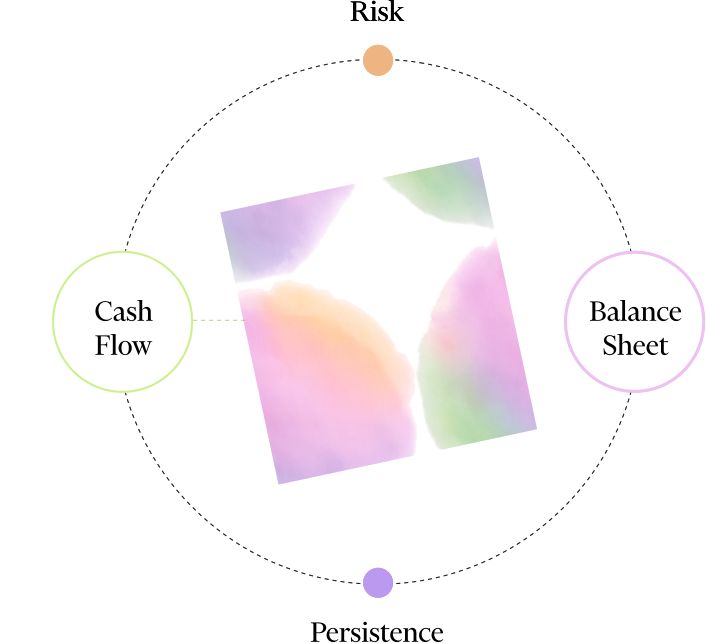
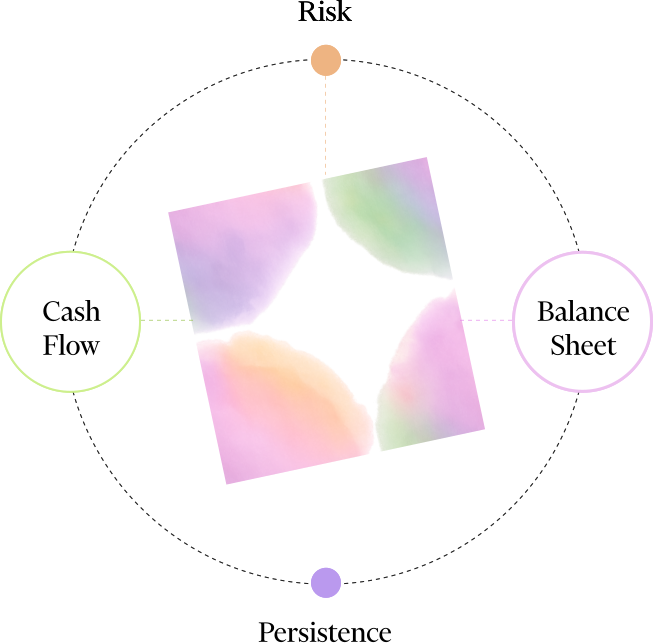
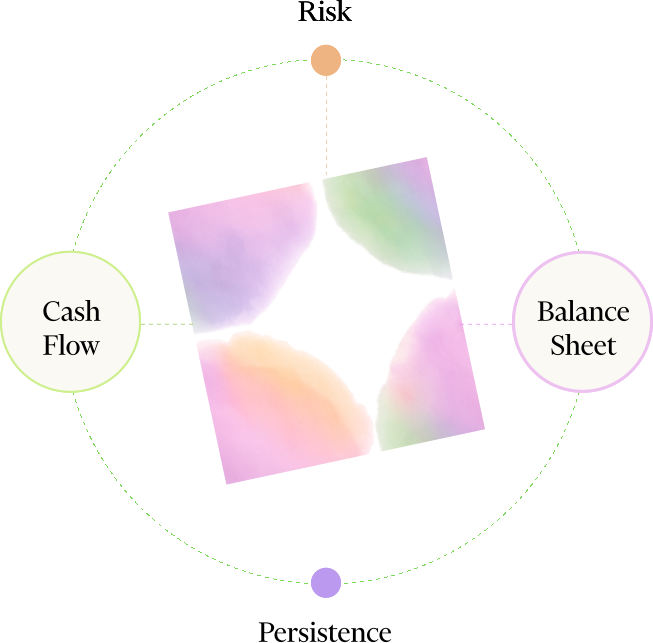
Oz’s framework integrates cash flow allocation, balance sheet context, structural risk, and persistence into a continuously updating measure of financial resilience.